Herbalism Is More Than Matching an Herb to a Symptom
Man, sometimes scrolling Facebook can stop you dead in your tracks.
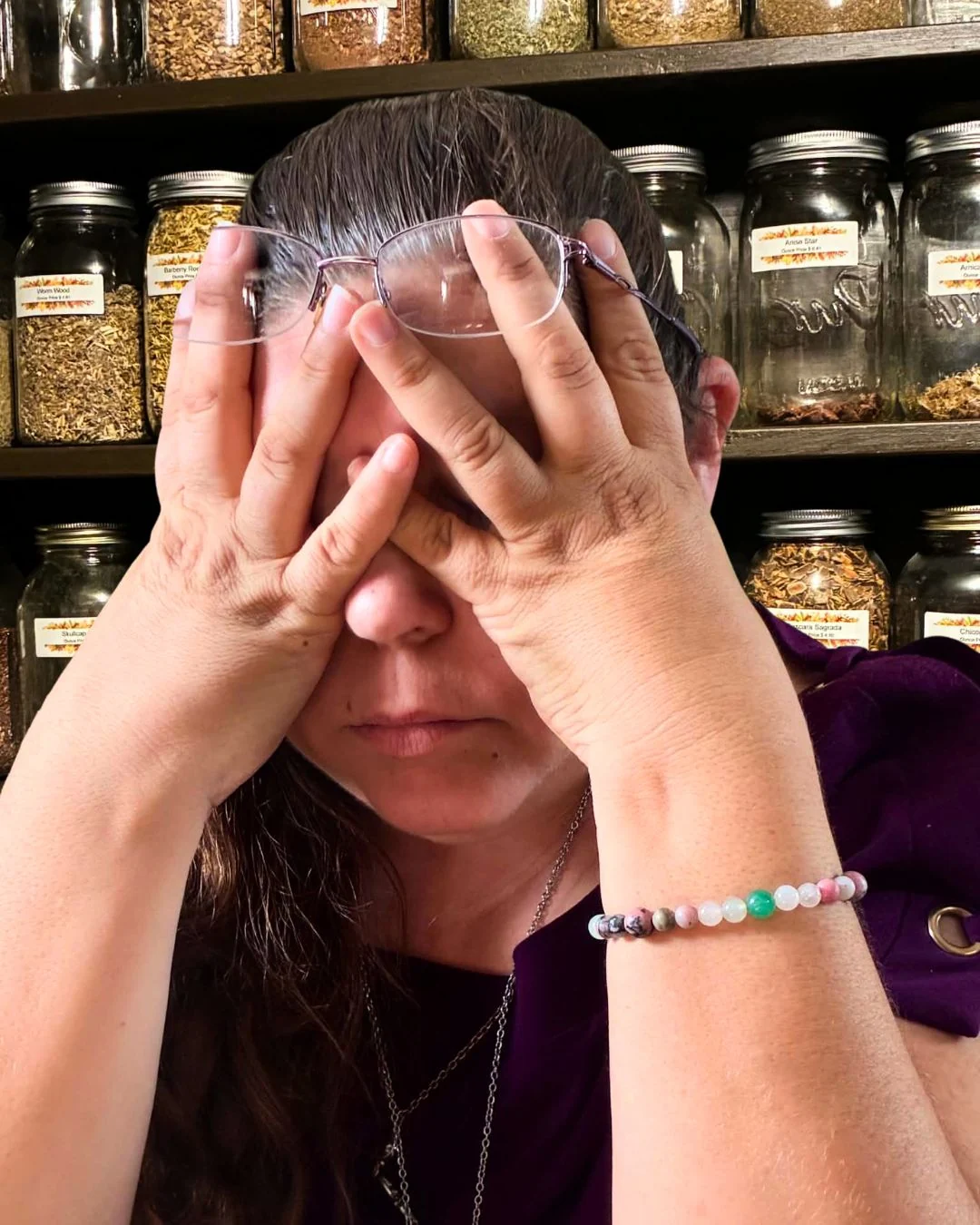
I had just gotten off work, finished eating, and sat down for a short doom scroll when I landed on a post about tinctures. The argument was that herbalists don't pay enough attention to the math, and that to get a “therapeutic dose” from certain tinctures, you would need to drink something like six bottles a day to reach the recommended gram equivalent of the herb. I stared blankly and felt a little horrified.
Six. Bottles. Of. Tincture. A Day. Seriously!
Shaking my head, I paused and had to comment. Let people believe that… the fuck?
You know, it wasn't really the math that bothered me. It was that the poster misunderstood how to apply extraction dosing against whole-herb dosing and actively posted that misunderstanding as implied fact.
Look, a tincture isn't the same preparation as eating the whole herb. Neither is an infusion, decoction, powder, standardized extract, or any other herbal preparation for that matter. Once we start extracting a plant, we introduce a whole new set of variables. We have to think about the plant part, the constituents we're trying to extract, what those constituents are soluble in, the solvent we're using, the concentration of that solvent, the extraction method, and what we're actually trying to accomplish with the finished preparation (Abubakar & Haque, 2020). We're no longer talking about simply consuming a certain number of grams of whole plant material. We're talking about an extraction, and what ends up in that extraction depends on what the plant contains, what we're using to extract it, and how we're preparing it.
That distinction matters when we start talking about a “therapeutic dose.” A tincture ratio tells us something useful about the relationship between the starting plant material and the finished preparation (European Medicines Agency [EMA], 2010). That's a description of the preparation, though, not a determination of the dose a particular person needs to produce a therapeutic effect. It also doesn't mean every constituent contained in the starting plant has magically transferred into the bottle. What gets extracted depends, in part, on the solvent and extraction conditions being used (Abubakar & Haque, 2020). So taking a recommended gram dose from one preparation, running it through a tincture ratio, and deciding someone needs enough tincture to equal that number of grams misses an enormous part of what an extraction actually is.
The preparation matters. The extraction matters. The plant matters, and the person matters.
After leaving my comment, I probably should have gotten off the internet for the day, because it didn't take long before I ran straight into another post that made me stop.
Apparently Facebook wasn't quite done with me yet.
This time, it was a beginner asking for suggestions for muscle aches. It was a reasonable question, and she specifically said she didn't want to become overwhelmed by all the possibilities. Of course, the responses started flooding in anyway.
Use this herb. Try that salve. Combine these two plants. This is what works for me.
The whole time I’m thinking…
What kind of ache are we talking about?
A “muscle ache” tells me where something hurts, but it doesn't necessarily tell me what is happening. Is this just ordinary muscle soreness after physical activity? Is the muscle cramping or spasming? Was there an injury? Is the tissue swollen? Is the pain burning or shooting? Is the muscle tight and contracted? Did something tear? How long has it been happening? What caused it? What makes it better or worse?
Those questions aren't me being difficult. The answers change how I would approach the situation and what I might suggest.
There are a shit load of herbs out there, but there are also a shit load of reasons someone's body can hurt. Recommending plants before understanding the problem reverses the order in which I think herbal reasoning should happen. Instead of starting with a favorite plant and hoping it fits, maybe we should first gather enough information to understand what we're looking at, decide what kind of action might actually be appropriate, and then consider which plants and preparations support that goal.
I mean, if you want to try every suggestion until you find something that works, more power to you, but asking the right questions first seems like a much better place to start.
That's when I had to stop internetting for the day.
But the more I thought about those two posts, the more I realized they bothered me for the same reason. One started with a number and jumped to a dose. The other started with a symptom and jumped to an herb.
Both jumped to an answer before asking enough questions to understand the problem.
And that is where I think we get ourselves into trouble.
Herbalism Is Confusing Because Bodies Are Confusing
I understand why people want simple answers. Herbalism is confusing. By God, it is confusing. But so is the human body.
There is a reason doctors, nurses, and other healthcare professionals ask so many damn questions. You fill out the paperwork, give them your history, explain your medications, describe your symptoms, and then they ask another 5,000 questions about the headache you thought would take two minutes to explain.
They're trying to gather enough information to understand what that headache might actually mean (Muhrer, 2014).
That doesn't mean conventional medicine always gets it right. Of course it doesn't. Healthcare professionals make mistakes. People get misdiagnosed. Treatments fail. Sometimes people learn very hard lessons because somebody got something wrong.
My point isn't that conventional medicine has perfected the process. My point is that the process of asking questions exists for a reason.
A headache isn't a diagnosis. Muscle pain isn't a diagnosis. “I can't sleep” doesn't tell us why someone can't sleep. These things tell us what a person is experiencing, but they don't necessarily tell us what is causing that experience or what needs to be done about it. So why should herbalism require less careful thinking simply because the tools we're using happen to be plants?
This is where I think the internet makes herbalism deceptively easy. Someone asks what to take for something, another person says what worked for them, somebody else names their favorite herb, and suddenly we have a list of remedies without ever establishing whether everyone is even talking about the same thing.
Two people can have what we call the same illness and still not experience it the same way. They can have different symptoms, different severity, different medical histories, different medications, different vulnerabilities, and different recoveries. Even when the name of the illness is the same, the body experiencing it isn't.
That matters.
It also means body constitution and individual response can't simply be ignored because we found an herb associated with the symptom we're looking at (Herbal Academy, n.d.). What works beautifully for one person may do very little for another, may require a different approach, or may not be appropriate for them at all.
Someone could suggest chamomile and not even realize that the person they're suggesting it to has an allergy to plants in that family . How would you know without asking?
So instead of immediately asking, “What herb is good for this?” maybe we need to get comfortable asking, “What is actually happening here?”
Because choosing the plant shouldn't be the beginning of the thought process. It should come after we've figured out what we're trying to accomplish.
Then You Have to Understand the Plant
And if asking questions to understand the human body wasn't complicated enough, herbalism gives us yet another entire biological system to learn.
The plant.
This is one of the things I think gets lost when herbalism becomes a list of remedies. We aren't working with little green pharmaceuticals where one plant equals one action. Plants are complex living organisms producing their own collection of constituents. Those constituents have different properties, different solubilities, and different potential actions (Abubakar & Haque, 2020).
So now the questions multiply.
What plant are we using? What part of the plant? What's actually in that part? Which constituents are relevant to what we're trying to accomplish? What are those constituents soluble in? How are we going to prepare the plant? Is the preparation we're choosing even a good way to access what we're trying to use? Do we even have the right part?
...Shit, what does the research say?
This brings us right back to that tincture post.
Maybe we pour hot water over the plant and make an infusion. Maybe we simmer tougher plant material in a decoction. Maybe we use alcohol and water to create a tincture. Hell, maybe we do a double extraction...
How long does that take?
Maybe we prepare an infused oil. Maybe the whole dried plant makes sense for what we're doing. These aren't just different containers for the same medicine.
The preparation is part of the decision.
If the constituents we're interested in are readily extracted into water, a water preparation may make perfect sense. If we're targeting constituents with different solubility characteristics, we may need another solvent or another preparation entirely (Abubakar & Haque, 2020). And extracting the largest possible number of constituents isn't automatically the goal either.
More isn't automatically better.
The question is: What are we trying to extract and why?
That's what was missing from the six-bottle argument. The tincture ratio was being treated like it could answer the entire dosing question when the preparation itself hadn't been given enough consideration.
It's also what was missing from the muscle-ache discussion. People were naming plants before anyone had established what action the person actually needed.
Different posts. Same problem.
We skipped the questions in the middle and jumped right to the answer.
But here's the thing: even when we slow down, ask those questions, identify what we're trying to accomplish, and choose a plant that makes sense, we still aren't done. Choosing the right plant doesn't guarantee that every preparation of that plant is interchangeable, and it certainly doesn't guarantee that every person will experience it in exactly the same way.
That's where another layer of herbal reasoning begins.
The Same Plant Can Still Leave Us With Questions
Just because we've chosen a plant that makes sense on paper doesn't mean we can predict exactly how that plant will behave in every preparation or every person.
Take passionflower.
Someone may read that passionflower is used for nervousness, restlessness, or sleep and reasonably think, “Okay, I'll make some passionflower tea” (Integria Healthcare, n.d.). Maybe that tea makes them incredibly sleepy. Maybe they feel relaxed without becoming particularly sleepy. Maybe their experience seems completely different from what somebody else described. That doesn't automatically mean the plant “works” for one person and “doesn't work” for another. It also doesn't automatically mean the information they read was wrong.
It means we have more questions.
What preparation was used in the information we're reading? What plant part? What dose? Was it an infusion or an extract? If it was an extract, what solvent was used? What exactly was being measured or observed? How similar is any of that to what this person actually used?
Then we still have the person themselves to consider. Because ya know it has to be complex...
Maybe preparation matters. Maybe dose matters. Maybe individual response matters. Maybe something completely unrelated to the plant explains the difference. I don't have to pretend I know the answer before I've investigated it.
That's the point.
Ask before assuming.
Knowing that a plant is associated with a particular action is information. Knowing how to decide whether that information applies to the plant, preparation, purpose, and person in front of you is a skill. Those aren't the same thing.
That's why we practice.
Herbalism Isn't “Take This for That”
This is why I get uncomfortable when herbalism gets reduced to lists. Ten herbs for anxiety. Five herbs for pain. Best herbs for sleep. What do you take for this? What do you take for that? Lists can be useful starting points for research, but they aren't a substitute for understanding what you're doing.
If someone says, “This is what I use when my muscles are sore after working all day,” they're sharing their personal experience. That can be useful information. It can even give somebody a direction to research. But somewhere along the way, “this works for me” often turns into “you should take this.” Those aren't equivalent statements.
A suggestion should spark questions and research, not replace them.
What does this plant do? Why might it fit this situation? Does the preparation matter? What are the contraindications? Does it interact with anything the person is taking? Is there a reason this particular person shouldn't use it? And, perhaps most importantly, do we understand the problem well enough to be recommending anything in the first place?
Plants being accessible doesn't remove those questions. It makes asking them even more important.
Accessible Doesn't Mean Simple
I think plants feel especially accessible because many of them literally are. We can grow them. Buy them. Make tea with them. Turn them into tinctures, oils, salves, syrups, powders, and all kinds of preparations in our kitchens. And I understand why that's appealing. Healthcare can be expensive. It can be frustrating. People can struggle to access it or feel like they aren't being heard when they do. People want to go more natural. There is tremendous value in learning about our bodies and learning how to care for ourselves. But somewhere in that accessibility is a dangerous assumption:
If I can access it easily, it must be easy to use safely.
It isn't.
Plants are capable of producing physiological effects. That's why we're using them medicinally in the first place. The same reality means they can have unwanted effects, interact with medications, be inappropriate for certain people, or simply be the wrong tool for what's happening (Ekor, 2014). “Natural” doesn't remove the need to understand what we're doing. Neither does tradition. Neither does somebody on Facebook saying it worked for them. And this is where those posts stopped being merely annoying to me.
They made me think about responsibility.
What You Post Matters
If someone posts that you need to drink six bottles of tincture to reach a therapeutic dose, and the person reading it doesn't know enough yet to question that information, what happens? Maybe they actually try it. Maybe they decide tinctures are useless because no reasonable person can afford or consume six bottles a day. Maybe they're frightened away from something that could have been useful when prepared and dosed appropriately.
Maybe they repeat the information to someone else.
Information doesn't stay inside the post where it started. It gets shared, screenshotted, repeated, paraphrased, taught, and eventually separated completely from the person who originally said it.
That's why what we say matters.
We aren't doctors simply because we study the functionality of medicinal plants inside the body. But deciding not to become doctors doesn't mean we get to skip learning about the human body if we're going to use plants to affect it (Borse et al., 2019).
And knowing a lot about plants doesn't give us permission to stop asking questions.
If I'm working with someone, I'm probably going to annoy the piss out of them with questions. I want to know what something feels like, when it started, what's normal for them, what's different, what medications they're taking, what else is happening, what they've already tried, what preparation they're using, and whatever else I need to understand before I start thinking I know what might help. I don't ask those questions because I need to prove how much I know.
I ask because I know how much I don't know until I've asked them.
And sometimes the answers should lead us away from herbs entirely. Sometimes the responsible answer is, “This isn't something you should be trying to manage with an herb recommendation. You need appropriate medical care.”
There is no failure in that answer.
There is responsibility in it.
The internet has given us access to an incredible amount of herbal information. It has also given every one of us the ability to publish an idea before we've finished questioning whether that idea is actually correct. So study. Research. Ask questions. Learn the body. Learn the plant. Learn the preparation. Know your limitations.
...And get comfortable saying, “I don't know yet. Let me find out.”
Herbalism isn't about having an herb ready for every symptom someone throws at you. It isn't about memorizing enough lists that every ailment eventually has a plant sitting beside it.
It's about learning how to think before you reach for one.
What is happening in this body? What am I actually trying to accomplish? What kind of action would support that goal? Which plants have that action? Which preparation makes sense for the constituents I'm trying to use? Is it appropriate for this particular person? What am I missing? And is this even something that belongs within the scope of herbal self-care?
Those questions aren't getting in the way of herbalism.
They are part of practicing it responsibly.
What you post matters. What you recommend matters. And if we're going to work with people's health, doing our best to cause no harm needs to matter more than having a quick answer.
References
- Abubakar, I. B., & Haque, M. (2020). Preparation of medicinal plants: Basic extraction and fractionation procedures for experimental purposes. Journal of Pharmacy & Bioallied Sciences, 12(1), 1–10. https://doi.org/10.4103/jpbs.JPBS_175_19
- Borse, S. P., Singh, D. P., & Nivsarkar, M. (2019). Understanding the relevance of herb–drug interaction studies with special focus on interplays: A prerequisite for integrative medicine. Porto Biomedical Journal, 4(2), e15. https://doi.org/10.1016/j.pbj.0000000000000015
- Ekor, M. (2014). The growing use of herbal medicines: Issues relating to adverse reactions and challenges in monitoring safety. Frontiers in Pharmacology, 4, Article 177. https://doi.org/10.3389/fphar.2013.00177
- European Medicines Agency. (2010). Guideline on declaration of herbal substances and herbal preparations in herbal medicinal products/traditional herbal medicinal products. European Medicines Agency guideline
- Herbal Academy. (n.d.). Intermediate Herbal Course. Herbal Academy.
- Integria Healthcare. (n.d.). Passionflower monograph [PDF]. Passionflower monograph
- Muhrer, J. C. (2014). The importance of the history and physical in diagnosis. The Nurse Practitioner, 39(4), 30–35. https://doi.org/10.1097/01.NPR.0000444648.20444.e6
Comments
Join the conversation. Your email is used for moderation only and is never displayed.
No comments yet. Be the first to add to the conversation.